
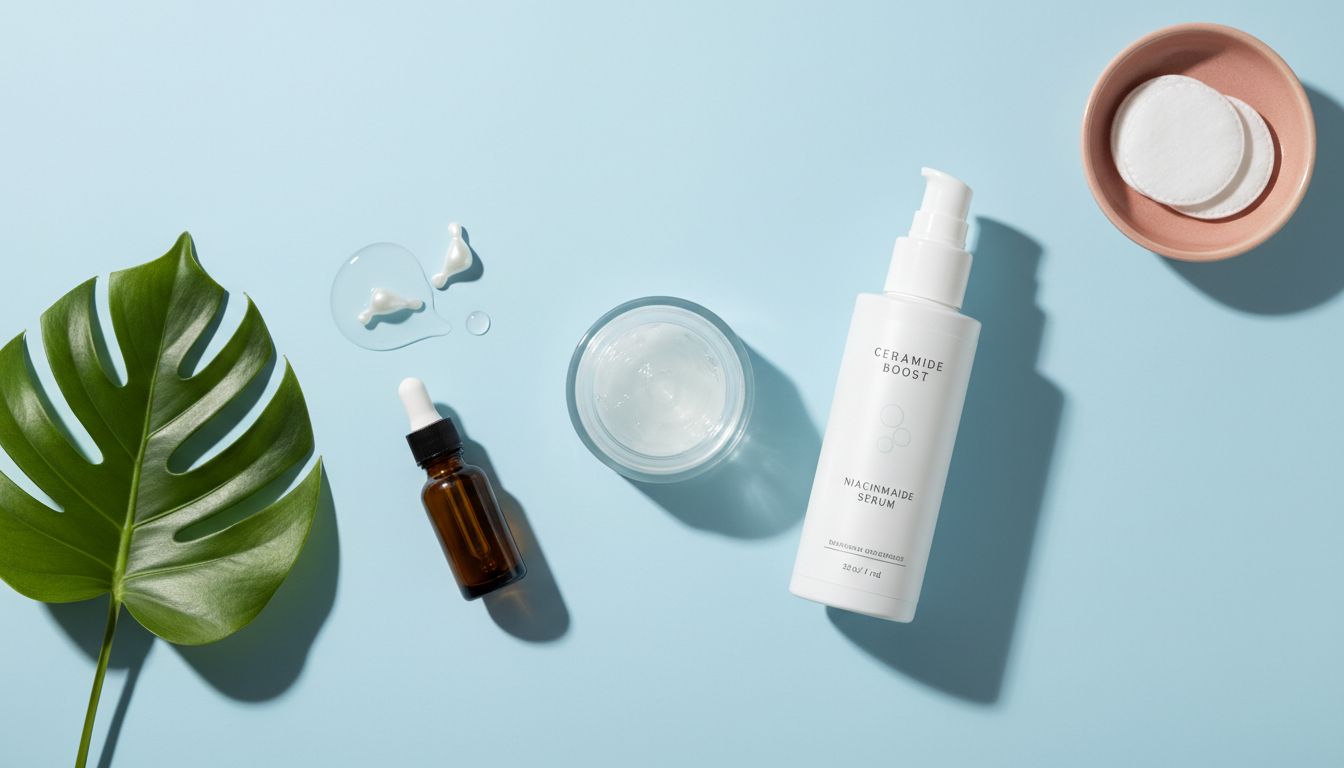
If your skin breaks out often, it can feel risky to use moisturizer at all. A lot of people with acne-prone skin worry that hydration will make their face look shinier, feel heavier, or trigger even more clogged pores. In reality, that fear often leads to a worse cycle: harsh acne treatments dry the skin out, the barrier gets stressed, and your complexion can end up both dehydrated and breakout-prone at the same time.
Dermatology guidance is pretty clear on this point: acne-prone skin still needs moisturizer. The American Academy of Dermatology notes that common acne treatments such as benzoyl peroxide, salicylic acid, adapalene, tretinoin, and isotretinoin can all cause dryness and irritation. A well-chosen moisturizer can help your skin tolerate these treatments better, especially if you choose a lightweight, non-comedogenic formula that supports the barrier without leaving behind a greasy film.
Why breakout-prone skin still needs hydration
One of the biggest skincare myths is that drying out acne will automatically improve it. In practice, over-drying can backfire. According to the AAD, when skin becomes too dry, the may respond by producing more oil. That extra oil can mix with dead skin cells, clog pores, and contribute to more breakouts.
This is why hydration is not the enemy of acne care. The goal is not to smother skin with heavy creams, but to give it enough water and barrier support that it stays balanced. When your skin feels tight, flaky, or irritated from treatment, it is usually a sign that your routine needs more support, not less.
There is also a practical angle here: if your acne products sting, peel, or leave your face uncomfortably dry, you are less likely to use them consistently. Gentle hydration can make an acne routine more tolerable, which matters because consistency is often what gets the best long-term results.
What to look for in a moisturizer that will not clog pores
If you have frequent breakouts, label reading matters. The AAD recommends looking for moisturizers described as oil-free, non-comedogenic, or won’t clog pores. These terms do not guarantee that every single person will love a product, but they are a helpful starting point when you are trying to lower the risk of congestion.
Mayo Clinic guidance also supports using nonoily, noncomedogenic moisturizers alongside acne treatment. That advice is especially useful for people who assume all moisturizers are too rich for acne-prone skin. Today, many formulas are specifically designed to hydrate without the heaviness that tends to make breakout-prone users nervous.
It is also smart to keep the rest of the formula simple when your skin is reactive. Fragrance-free products are often easier to tolerate, especially if you are already using active ingredients. In general, a lightweight gel or gel-cream with barrier-supportive ingredients is usually a safer bet than a thick, occlusive cream if your complexion clogs easily.
Why gel and gel-cream textures make sense for acne-prone skin
Texture can make a huge difference in how a moisturizer performs on breakout-prone skin. Both AAD resources and Mayo Clinic guidance point toward lightweight, water-based, or gel-type formulas as smart choices for oily or acne-prone complexions. These textures tend to feel fresher on the skin and are less likely to leave a heavy residue.
That matters not just for comfort, but for routine adherence. If a moisturizer feels sticky, greasy, or suffocating, most people stop using it. A lightweight gel is often easier to apply morning and night, including under sunscreen and makeup. For many readers, this is the difference between owning a moisturizer and actually using it every day.
Some products are explicitly positioned for this need. For example, CeraVe Oil Control Moisturizing Gel-Cream is described as lightweight, fragrance-free, non-comedogenic, and suitable for acne-prone skin. CeraVe Ultra-Light Moisturizing Gel is also marketed as oil-free and formulated for weightless hydration, which is the kind of profile many breakout-prone shoppers are looking for.
Ceramides: the barrier-supporting ingredient worth knowing
Ceramides are one of the most useful ingredients for skin that is both acne-prone and dehydrated. The AAD notes that ceramides help the skin retain moisture and strengthen the barrier. That is especially relevant if you are using treatments like adapalene, tretinoin, or benzoyl peroxide, which often leave skin dry, flaky, or more easily irritated.
When your barrier is compromised, your skin can become red, sting more easily, and struggle to hold onto hydration. Ceramides help address that problem by reinforcing the outer layer of skin. They are not acne treatments in the same way that retinoids or benzoyl peroxide are, but they can make an acne routine much easier to tolerate.
There is growing interest in ceramides as adjunct skincare in acne management. A 2025 multicentre evaluation looked at a ceramide-containing hydrating cleanser and facial moisturizing lotion with a focus on improving tolerability and adherence in facial acne. That is an important reminder that supportive skincare is not just cosmetic; it can help people stick with the routines their skin needs.
Niacinamide: a multitasking option for frequent breakouts
Niacinamide has become a familiar name in acne-friendly skincare, and for good reason. It is often included in lightweight serums and moisturizers aimed at supporting the barrier while keeping formulas friendly for oily or blemish-prone skin. In practical terms, it is one of those ingredients that fits well into routines where you want hydration without a rich, greasy finish.
Research interest is growing here too. A 2024 randomized split-face trial evaluated a moisturizer containing ceramides and niacinamide alongside topical acne treatment in people with mild-to-moderate acne. Specifically, it compared a ceramides-and-niacinamide moisturizer with a hydrophilic cream in participants already using benzoyl peroxide and adapalene, which shows that this ingredient combination is being studied as a supportive option during acne therapy.
Niacinamide is also being explored in acne-targeted leave-on products. A 2025 open-label study of a serum containing niacinamide plus acids reported improvements in acne severity, inflammatory lesions, and skin texture and pore appearance over eight weeks. That does not mean every niacinamide product will act like an acne treatment, but it does reinforce why this ingredient keeps showing up in breakout-focused formulas.
Other lightweight hydrators that help without heaviness
Ceramides and niacinamide get a lot of attention, but they are not the only useful ingredients for dehydrated, acne-prone skin. The AAD also points to ingredients like hyaluronic acid and aloe as helpful for preventing overdrying from acne treatments without adding extra oil. These are the kinds of ingredients that make a gel moisturizer feel refreshing instead of greasy.
Hyaluronic acid is especially common in lightweight gels because it helps attract water to the skin. When paired with a non-comedogenic formula, it can give that plump, comfortable feel many people want without the thick finish they are trying to avoid. This is one reason oil-free gel moisturizers can still feel genuinely hydrating.
A good example is the category of ultra-light gel formulas that combine humectants with barrier helpers. Products marketed with ceramides, niacinamide, and hyaluronic acid aim to cover all three bases: support the barrier, add water-based hydration, and keep the overall texture light enough for skin that clogs easily.
How to apply moisturizer so it works better
Even a great moisturizer can underperform if you use it at the wrong time. The AAD recommends applying moisturizer right after cleansing, while leaving a little water on the skin. This helps trap hydration more effectively, which is especially useful if your cleanser or acne treatment tends to leave your face feeling tight.
For most people with frequent breakouts, the easiest routine is simple: cleanse gently, pat so the skin is not dripping but still slightly damp, apply your lightweight moisturizer, and then use any additional daytime sunscreen as needed. If you use strong actives, you may also find that moisturizing helps reduce the sting or dryness that sometimes comes with treatment.
At night, the same logic applies. If you use adapalene, tretinoin, or benzoyl peroxide, a lightweight, non-comedogenic gel or gel-cream can help buffer the drying effects. The point is not to overload skin with layers, but to create a routine that keeps your complexion comfortable enough to stay consistent.
A practical routine for hydrating skin with frequent breakouts
If you are trying to build a routine from scratch, keep it boring in the best possible way. Start with a gentle cleanser, then use a fragrance-free, lightweight, non-comedogenic moisturizer. If your skin is oily, a gel or gel-cream is often the most comfortable place to begin, especially if it contains ceramides, niacinamide, or hyaluronic acid.
Next, make sure your acne treatment and moisturizer are working together instead of fighting each other. If your treatment leaves you flaky, stinging, or red, your skin may need more barrier support. This is where ceramide-based hydration can be genuinely useful. Better tolerability often means better adherence, and better adherence gives your treatment a fair chance to work.
Finally, give products time and judge them by how your skin behaves over a few weeks, not just one day. The best moisturizer for acne-prone skin is usually the one you barely notice: no greasy layer, no obvious clogging, and no constant tightness. For many people, that sweet spot is a fragrance-free, oil-free gel moisturizer that keeps hydration light but effective.
Hydrating a complexion with frequent breakouts is less about finding the richest cream and more about choosing the right kind of support. Dermatology guidance consistently points toward lightweight, non-comedogenic hydration, especially when acne treatments are already pushing the skin toward dryness and irritation.
The most practical takeaway is simple: look for a gel or gel-cream labeled oil-free or non-comedogenic, apply it to slightly damp skin, and prioritize ingredients like ceramides, niacinamide, and hyaluronic acid. For acne-prone skin, that combination often offers the best balance of comfort, barrier care, and lightweight hydration that will not clog pores.


![Best PDRN Cream Reviewed [2026 Updated]](https://i0.wp.com/yourskintellseverything.com/wp-content/uploads/2026/07/hf_20260721_035020_0dcfa11f-48a8-4714-af54-93010d23babd-scaled.png?fit=640%2C358&ssl=1)


